You say something in Spanish. Your kid gets every word (you can see it land) and answers you in English. You say it again, a little slower. Same thing. After a while you stop correcting it, because who has the energy to turn every sentence into a standoff.
If that's your house, you're not doing anything wrong, and your child isn't broken. This is one of the most common things we hear from Spanish-speaking families raising kids abroad. It has a cause that makes complete sense once you see it, and it has a way out. Let's take both.
The short version
- Understanding and speaking are two different muscles, and the speaking one only grows with use.
- "Speak more Spanish at home" stalls because the missing piece isn't input, it's a reason to produce it.
- What breaks the pattern is other people: a native teacher and other kids in the same boat.
- The first signs come within weeks, and they show up at home before they show up in class.
Why a kid understands but won't speak
Your child's brain is running a quiet cost-benefit calculation, all day, without telling anyone. Understanding is cheap: they've heard Spanish since before they could talk, so it goes in effortlessly. Producing it is expensive: they have to dig for the word, build the sentence, risk getting it wrong. And here's the catch: they don't have to, because you understand them perfectly when they answer in English. The expensive option never gets chosen, so the speaking muscle never gets worked.
Stack on top of that a whole world that runs in English. School, friends, the group chat, every video. Spanish becomes the one language a single person at home keeps asking for. Against all of that, of course it loses ground. None of this is your child rejecting their roots, and none of it is you not doing enough.
Understanding and speaking are two different muscles, and the speaking one only grows with use: out loud, with someone, regularly.
Why the "just speak more Spanish at home" advice stalls
You've probably already been told, helpfully, to "just speak more Spanish." You already do. That's the frustrating part: the advice assumes the problem is input, and your kid is drowning in input. What they're short on is a reason to produce it.
At home, the script is set. You speak Spanish, they answer in English, everyone understands everyone, life moves on. There's no friction, and friction is exactly what makes a kid reach for the harder word. The thing that breaks the pattern is almost never more of the same at home.
Why does he understand Spanish but won't speak it?
Eight questions about how Spanish actually works in your house, and we tell you what is going on. Free, on screen, without leaving your email.
Take the quiz
What actually gets them speaking
The unlock, nine times out of ten, is other people. A teacher who only speaks Spanish and whom your child wants to impress. And (this is the big one) other kids in the same boat.
Something shifts when your daughter sees a boy in Toronto and a girl in Berlin who also understand their parents perfectly and also trip over their words. Spanish stops being "the language Mum keeps pushing" and becomes "the language my friends and I use in this room." Suddenly there's a reason to speak it that has nothing to do with you, and the standoff at home quietly dissolves.
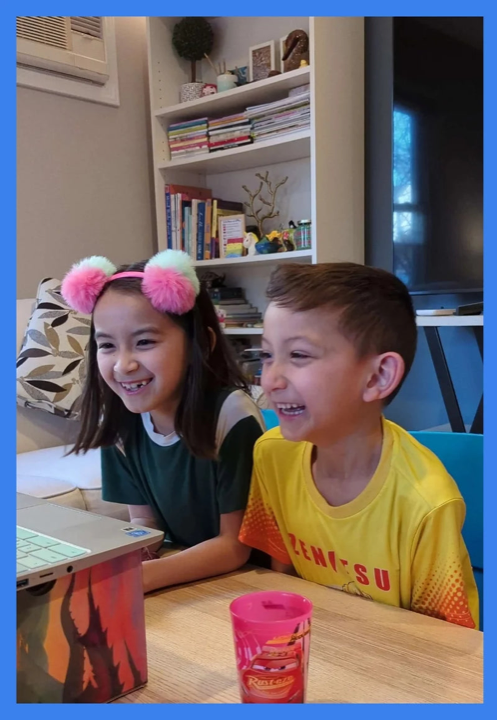
That's exactly what our Spanish classes for heritage speakers are built around: small groups of children living the same double life, a native teacher, two or three times a week. Your kid speaks because they want to be part of it, not because anyone asked. The first sign it's working usually shows up at home: a Spanish sentence dropped out of nowhere, unprompted, when they forget to translate themselves.
And if your child is more beginner than "understands everything"?
Plenty of kids land further back: they've heard Spanish around the house but it never really took, so they neither understand much nor speak. That's just as welcome, and honestly it's the most common starting point of all.
Within Spanish for heritage speakers, beginners get their own track that runs entirely in Spanish but is built so they follow from the first minute, learning the way they learned their first language: by listening, moving and playing, not by memorising lists. The endpoint is the same (a kid who speaks), just from a different starting line.
A few things that quietly make it worse
You don't need to do these, but it's worth knowing they backfire, because they're so tempting:
Correcting every English answer. It turns Spanish into a test, and kids flee tests.
Making them "perform" for relatives. "Say something in Spanish for Grandma" freezes even confident kids.
Letting the disappointment show. They read your face, and they'll avoid the thing that makes it fall.
None of this is a character flaw on your part: every parent does some of it. It just helps to know the gentler path works better.
What changes, and when
Let's be honest about the timeline, because the internet is full of people who aren't. Nobody flips from silent to chatty in a fortnight. What tends to happen is quieter and more believable.
In the first few weeks, the resistance softens before the Spanish does. Your child stops switching straight to English the moment you speak, lets a few more words through at home, and (the tell that surprises most parents) starts looking forward to the class. Real sentences come later, and they come in bursts: three weeks of nothing obvious, then a jump. Heritage Spanish moves in waves, not a straight line, so the trick is not to measure it day to day. And once the speaking is rolling, many families take the next step: helping their child learn to read and write in Spanish.
If you're watching for one thing, watch for the unprompted Spanish at home. That's the speaking muscle waking up.
A few quick questions
My kid is shy on top of all this. Will a class even work?
Often better than you'd expect. Groups are tiny, four to six, so there's nowhere to disappear, and the teacher notices the second a child goes quiet. Shy kids who say nothing in week one are often putting their hand up by week three.
Is it too late if they're already ten or eleven?
No. The Spanish is already in there from years of listening; you're activating it, not building it from scratch. That works at six and it works at twelve.
How is this different from an app?
An app gives your child more input they don't need. A live class gives them a reason to speak: a person who answers back. Here's what a real class looks like.
Won't pushing Spanish hold back their English or confuse them?
No. Decades of research on bilingual kids point the other way. Growing up with two languages tends to help with focus and switching between tasks, not hurt it. Your child isn't confused; they're just choosing the easier language when nobody gives them a reason not to.
See it for yourself
Watching your child answer in Spanish to someone who isn't you is the thing that makes it click, for them and for you. The trial costs €3 (about $4 in the US), not free, so the kids in that first class are there for real and your child gets a proper group from day one.
And see what happens when the answer comes back in Spanish. (Here's how Diluu works, start to finish.)