Spanish classes for kids aged 7–9: games, missions and real conversation
Live classes with native teachers, in groups of maximum 6 children (4 when they start from scratch). This is the age when children go from understanding to answering: team missions, role play and the first steps in reading and writing in Spanish. Part of our online Spanish classes for kids.
Book a trial class · €3★★★★★ More than 300 families have given us 5 stars

 ¡Me toca a mí!
¿Por qué?
¡Yo creo que sí!
¡Me toca a mí!
¿Por qué?
¡Yo creo que sí!
Proyecto de la semana
- Build an escape room at home
- Run it for the group, in Spanish
What a class looks like at this age
Thirty minutes with a goal. At 7, 8 and 9 children get bored of repeating words, so the class is built around missions, games with rules and small projects in teams. Spanish stops being the subject and becomes the tool they need to win. For children starting from scratch, everything the teacher says comes with pictures, objects and gestures (the Total Physical Response method), so nobody is waiting for a translation.
-

A mission to solve together
Plan a trip, design the menu of a restaurant, find out who took the last biscuit. The group only gets there by talking to each other in Spanish.
-

A role to play
Shopkeeper, doctor, journalist, explorer. Taking a role is the least frightening way to speak: it is not them talking, it is their character.
-
A project to build at home
Plan a family trip, invent the news of the day, design an escape room. They build it during the week and present it to the group, in Spanish.
Meet the native teachers who run these classes.
30 minutes, live
A real class: this is what Spanish sounds like at 7, 8 and 9.
From understanding to speaking
At 7, 8 and 9 children already have an opinion about everything. What they need is a place where saying it in Spanish feels safe, and a group where everyone is at their level. That is why we group by level as well as by age.

Starting from zero
Beginner groups of maximum 4 children, 100% in Spanish. Everything the teacher says is supported by pictures, objects and gestures, so they understand from the very first class without a word being translated.
Understands, but answers in English
The most common case at this age. They do not need to start again, they need reasons to speak and children their age to speak to. That is what Spanish for heritage speakers is for.
Already holds a conversation
Groups where the goal is to widen vocabulary, give reasons and start reading and writing properly, so their Spanish grows beyond the words they use at home.
And a reading track: Reading & Theatre
Two group levels for this same age, for children who are already putting letters together. They run alongside the speaking class, not instead of it, and both are built around reading out loud and acting, which is why nobody notices they are studying.
Reading and writing, step by step
For children who read and write isolated words or short sentences. From there they keep going: longer texts, first paragraphs of their own, and reading out loud until it sounds like speaking.
Literature, grammar and spelling
They read real stories and plays, and grammar and spelling arrive through use instead of rules: they fix what they write because they need it for the scene they are about to perform.
Not reading in Spanish at all yet? They start with the one-to-one Spanish literacy course and move into these levels afterwards.
Year by year, in detail
Seven and nine are two very different ages. This is what a class looks like at each one, and what changes along the way.
Spanish classes for 7 year olds
At seven, play does not disappear: it turns into a project. Children still sing and move, but now the class has a goal, like building the menu of a restaurant or solving a small mystery with the rest of the team. To get there they need longer sentences, so "quiero pizza" becomes "yo quiero pizza porque me gusta el queso".
Children arriving with no Spanish at all join a beginner group of maximum 4. Children who already hear Spanish at home start putting into words what, until now, they had only understood.
First long sentencesSpanish for 8 year olds
Eight is the age of role play. Shop and customer, doctor and patient, journalist and footballer: children take a role, prepare it and defend it in Spanish in front of the group, which is the least intimidating way to hold a real conversation.
It is also when letters start to matter. In class they read short words and sentences that appear inside the games, and many families add our one-to-one literacy course at this point, so reading grows at the same speed as speaking.
Real conversationSpanish classes for 9 year olds
At nine, children have opinions and want to argue them. Classes make room for that: simple debates ("¿es mejor el verano o el invierno?"), presentations about something they love, creative projects they show to the group. Vocabulary stops being lists of objects and becomes ideas, feelings and reasons.
Nine is also when many children finish learning to read and write in Spanish properly, with the literacy course first and the Reading and Theatre levels afterwards. And it is the bridge to the group for 10 to 12 year olds, where the topics grow with them.
Ideas and reasonsFamilies in every time zone
Understands the Spanish at home, but answers in English?
This is the age when most families notice it. Your child is not a beginner: they need reasons to speak and other children to speak to.
 Spanish for heritage speakers →
They can read. Can they read in Spanish?
By 7 or 8 most children already read in their strongest language, and that is exactly what makes this the best moment to learn to read and write in Spanish too. Our literacy course is one-to-one and goes at their pace, alongside their weekly speaking class.
Spanish literacy for kids →
What families of 7 to 9 year olds say
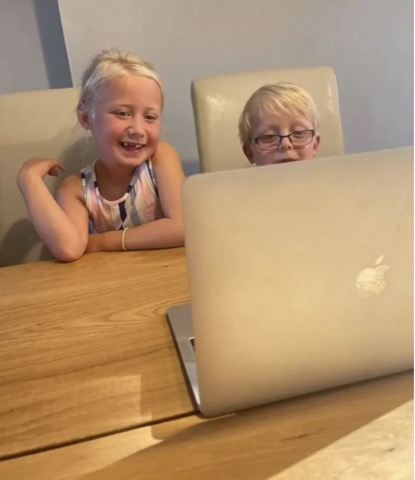
"Diluu has a wonderful team of teachers who teach your children how to speak Spanish in a very fun way! My daughter overcame her fear of speaking thanks to their classes."
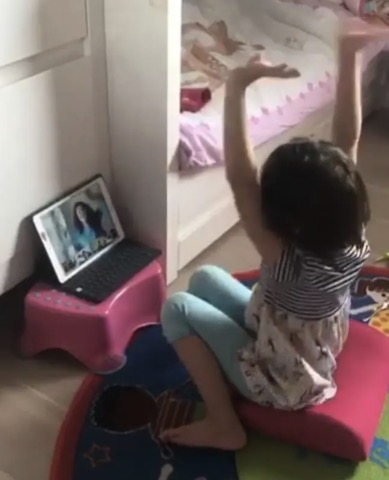
"We speak Spanish at home, but she was always afraid to use it. Since she started with Diluu she lost that fear and speaks a lot more Spanish, she even tries new conversations."
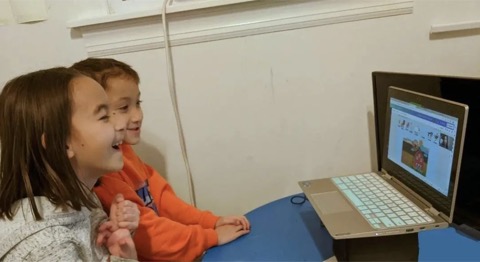
"I love their teachers and how they teach. My children are excited about the class and, most importantly, they learn the language while having fun."

"The classes are fun and exciting, with the added bonus of diversity with international students. I highly recommend Diluu's classes."
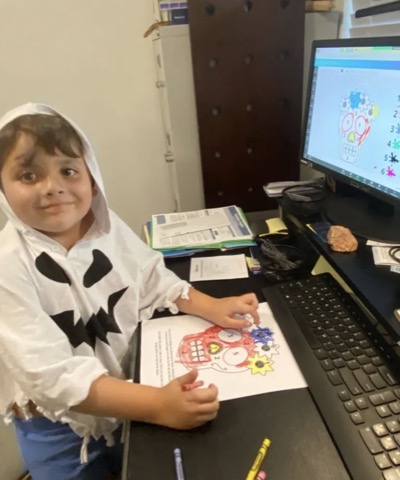
"My son can't wait for his Spanish lesson every Saturday. He loves interacting with his teacher and the other kids in the class."
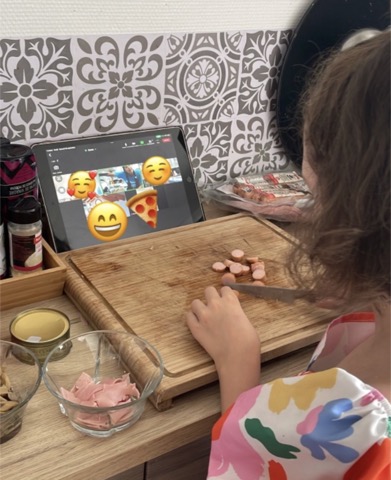
"They are fun and inclusive for all levels. I was looking for a homeschool Spanish academy and Diluu was a great solution: my kids' confidence grows every week."
★★★★★ 5.0 from 300+ reviews · Read more reviews from families
Why does he understand Spanish but won't speak it?
Eight questions about how Spanish actually works in your house, and we tell you what is going on. Free, on screen, without leaving your email.
Take the quiz
FAQs about Spanish classes for 7 to 9 year olds
Can my child start at 7 or 8 with zero Spanish?
Yes. Beginners have their own groups, with a maximum of 4 children, and the class is 100% in Spanish with the Total Physical Response method: everything the teacher says comes with pictures, objects and gestures, so children understand from the very first day without anything being translated.
Will they learn to read and write in Spanish?
In class they take the first steps: they read short words and sentences that appear inside the games. For full reading and writing we have our own one-to-one literacy course, followed by the Reading and Theatre group levels, which many families take alongside their weekly speaking class.
How is this different from Spanish at school?
Groups of maximum 6 children instead of a class of 25, 100% immersion in Spanish and speaking from minute one. The goal here is not to pass an exam or fill in a worksheet: it is to hold a conversation, so almost all the class time is time your child spends talking.
How many children are there per class?
A maximum of 6 children per group, and a maximum of 4 in beginner groups, so every child speaks several times in each class. The literacy course is one-to-one.
What schedule options are there?
We have classes from Monday to Sunday and cover every time zone, so families in Europe, the Americas, Asia and Oceania all find a slot that works. New groups open every week, so there is rarely a long wait for the right time and level.
Is there any commitment?
No. You start with a €3 trial class and, if your child enjoys it, you choose the plan that fits your week. There is no minimum term: you can change plan, pause or cancel whenever you need to.
Before and after this stage
Their Spanish keeps growing with them.
A younger one at home?
Between 4 and 6 the method is pure play: songs, stories and games in groups of maximum 4.
Spanish classes for kids aged 4–6 →
Turning 10 soon?
Longer conversations, current topics and projects with more depth, with children their own age.
Spanish classes for kids aged 10–12 →
One class is all it takes to hear them answer in Spanish
Thirty minutes, €3, no commitment, with a native teacher and a small group of children their age.
Book a trial class · €3Not sure yet? Read what to expect in your child's trial Spanish class.