Spanish classes for kids aged 10–12: real conversation, real friends
This is the age when Spanish stops being a class and becomes something of their own: debates, creative projects and proper conversation with native teachers and classmates from 56 countries. Groups of maximum 6 children (4 when they start from scratch). Part of our online Spanish classes for kids.
Book a trial class · €3★★★★★ More than 300 families have given us 5 stars
¿Deberían existir los deberes?
Live now · 30 seconds each to convince the group

 ¡No estoy de acuerdo!
¿Y tú qué opinas?
¡Pero espera!
¡No estoy de acuerdo!
¿Y tú qué opinas?
¡Pero espera!
What a class looks like at this age
Thirty minutes of talking about things they actually care about. No colouring sheets and no cartoon vocabulary: at 10, 11 and 12 the content has to be worth their time, so the class runs on debates, role play, team projects and a fair amount of humour. Spanish is not the subject here, it is what they use to win the argument.
-
A debate with two sides
Homework, school uniforms, phones at the table, the best film of the year. Everyone gets a side to defend, and the group decides who was most convincing.
-

A role with a problem to solve
A journalist in a press conference, a guide showing a city, a witness in a strange case. Taking a role is still the easiest way to say something difficult out loud.
-
A creative project, in teams
A podcast episode, a fake news bulletin, a travel plan with a budget. They build it across a few weeks and present it in Spanish to the rest of the group.
Meet the native teachers who run these classes.
30 minutes, live
A real class: this is what Spanish sounds like at 10, 11 and 12.
The best age to learn, and the shyest age to speak
Between 10 and 12, tweens can move faster than at any other age: they concentrate for longer, they know more about the world and they have plenty to say about it. The same years bring the fear of sounding silly in front of other people. That is why groups are small and formed by age and by level, and why getting it wrong is part of the game.

They can go fast now
A preteen brain does in one term what a five year old needs a year for: they hold attention for longer, they already know how a language is put together and they ask why. Complete beginners start in a group of maximum 4, with guided immersion and everything supported by pictures, objects and gestures.
And they hate getting it wrong in public
Nobody feels watched like a 12 year old. So the group is small, everyone is the same age and the same level, and the teacher corrects without stopping the conversation. In a class of six, nobody can hide, and nobody has to perform either.
Understands at home, but will not speak it
The most common case we see at 10 to 12. Your child is not a beginner: they need a place where Spanish is the normal language and other children their age to use it with. That is what Spanish for heritage speakers is for.
Year by year, in detail
Ten and twelve are two very different ages, even if both land in the same middle school years. This is what a class looks like at each one, and what changes along the way.
Spanish classes for 10 year olds
Ten is when the games turn into projects with an opinion attached. They still want to play, but the play has to lead somewhere: a plan, a presentation, a team that wins. Conversations get longer, and answers stop being three words.
Children who arrive with no Spanish join a beginner group of maximum 4 and get going fast, because at ten they can already lean on what they know about their own language. Children who have heard Spanish at home for years start turning that into speech.
Longer conversationsSpanish for 11 year olds
Eleven is the age of the simple debate. They defend a side, they listen to the other one and they change their mind out loud, which is exactly the kind of talking that builds a language. Humour arrives too: jokes in Spanish, and the first time they laugh at something without translating it first.
Reading and writing grow at the same time. Many families add the literacy course here so that what they can say and what they can write stop being two different levels.
Debates and humourSpanish classes for 12 year olds
At twelve the goal is a real conversation: talking for thirty minutes about something that matters without switching language when it gets hard. Creative projects get ambitious, from a podcast to a documentary script, and vocabulary follows what they are into rather than a textbook.
It is also the age when Spanish stops being something they are taken to and becomes theirs: a tool for travelling, for family, for friends they made online and keep for years. Twelve is where our programme ends, and what they take away is a Spanish they use, not one they revised.
Fluent conversationFamilies in every time zone
Understands everything, but is embarrassed to speak it?
At 10 to 12 this is the most common thing we hear. It is not a level problem: it is the age. Small groups, children their own age and Spanish as the normal language of the room.
 Spanish for heritage speakers →
Reading, scripts and spelling: Reading & Theatre
At 10 to 12 the group levels of Reading and Theatre are the perfect companion to the weekly speaking class. They read out loud, they learn scripts and they perform them, and spelling and the harder bits of grammar arrive through use rather than through rules.

Fluency and confidence
For children who already read in Spanish but still stumble. Longer texts, reading out loud until it sounds like speaking, and their first paragraphs written without help.
Literature, scripts and advanced grammar
Real stories and plays, scripts they rehearse and perform, and the spelling and grammar that only matter once you are writing something you want other people to read.
Not reading in Spanish at all yet? They start with the one-to-one Spanish literacy course, which works at any age, and move into these levels afterwards.
Spanish literacy for kids →What families of 10 to 12 year olds say

"The classes are fun and exciting, with the added bonus of diversity with international students. I highly recommend Diluu's classes."
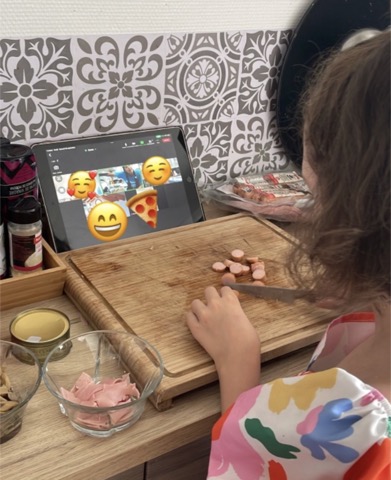
"They are fun and inclusive for all levels. I was looking for a homeschool Spanish academy and Diluu was a great solution."
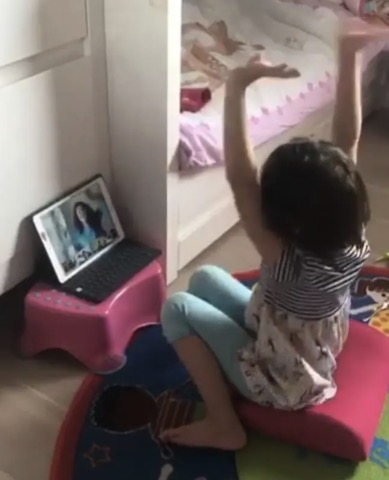
"We speak Spanish at home, but she was always afraid to use it. Since she started with Diluu she lost that fear and speaks a lot more Spanish, she even tries new conversations."
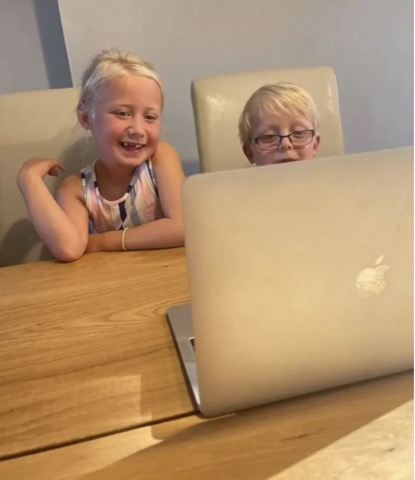
"Diluu has a wonderful team of teachers who teach your children how to speak Spanish in a very fun way! My daughter overcame her fear of speaking thanks to their classes."
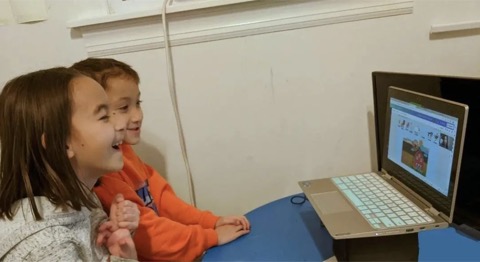
"I love their teachers and how they teach. My children are excited about the class and, most importantly, they learn the language while having fun."
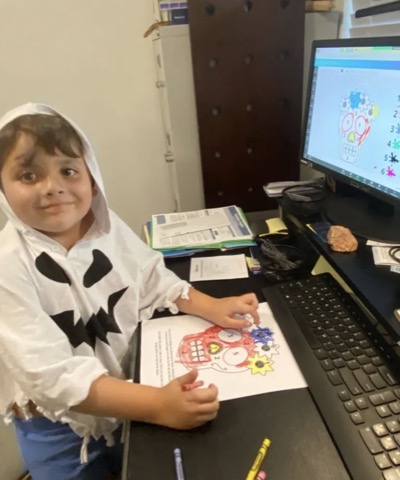
"My son can't wait for his Spanish lesson every Saturday. He loves interacting with his teacher and the other kids in the class."
★★★★★ 5.0 from 300+ reviews · Read more reviews from families
Why does he understand Spanish but won't speak it?
Eight questions about how Spanish actually works in your house, and we tell you what is going on. Free, on screen, without leaving your email.
Take the quiz
FAQs about Spanish classes for 10 to 12 year olds
Is 10 or 11 too late to start Spanish?
Not at all. At 10, 11 and 12 children learn faster than ever: they concentrate for longer, they already understand how a language works and they want to know why things are said that way. Complete beginners start in their own group of maximum 4 children, with guided immersion (the Total Physical Response method), so everything the teacher says comes with pictures, objects and gestures and nothing has to be translated.
Will my 12-year-old be in class with little kids?
No. Groups are formed by age, so 10, 11 and 12 year olds are together, and also by level, so nobody ends up in a group where everyone else is far ahead or far behind. A 12 year old is never sitting in a class of 6 year olds.
My child understands Spanish but is embarrassed to speak it. Will this help?
Yes, and it is the most common case at this age. The class is a small group of children the same age and the same level, where speaking is a game and not an exam: nobody is marked, everyone gets things wrong and that is part of it. Our Spanish for heritage speakers is built exactly for children who understand everything at home but answer in another language.
How many students are there per class?
A maximum of 6 children per group, and a maximum of 4 in beginner groups, so every child speaks several times in every class. The literacy course is one-to-one.
What schedule options are there?
We have classes from Monday to Sunday and cover every time zone, so families in Europe, the Americas, Asia and Oceania all find a slot that works. New groups open every week, so there is rarely a long wait for the right time and level.
Is there any commitment?
No. You start with a €3 trial class and, if your child enjoys it, you choose the plan that fits your week. There is no minimum term: you can change plan, pause or cancel whenever you need to.
Before and after this stage
Their Spanish keeps growing with them.
Not quite 10 yet?
Between 7 and 9 the class runs on missions, role play and the first steps in reading and writing in Spanish.
Spanish classes for kids aged 7–9 →
And after 12?
Diluu is built for children aged 4 to 12, so we do not run secondary school courses or exam preparation. What a child leaves with at 12 is Spanish they can actually use, and many carry on with us in Reading and Theatre.
See everything we do in Spanish →Younger brother or sister at home? There is also a group for 4 to 6 year olds, where the method is pure play.
One class is all it takes to hear them argue in Spanish
Thirty minutes, €3, no commitment, with a native teacher and a small group of children their age.
Book a trial class · €3Not sure yet? Read what to expect in your child's trial Spanish class.